
Category 3 (Black Water) Cleanup in Lakewood
Water damage isn't all the same. Category 3 is the most contaminated class, and it includes sewage. Here's what the categories mean and why it changes how cleanup is done.
The three water categories
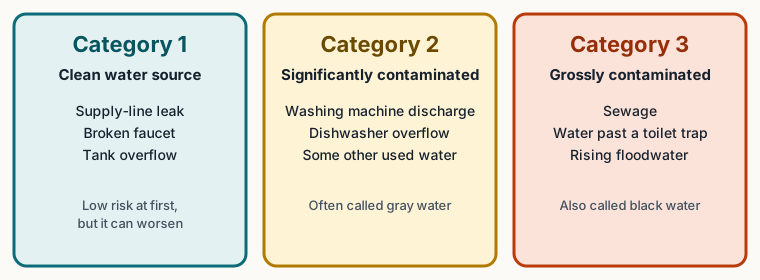
Water damage restoration uses a three-category classification described in the S500 standard published by the IICRC. It sorts water by how contaminated the source is. Think of it as a way to decide what protective gear and cleaning steps are needed, not as a scare label.
Category 1: clean source
Supply-line leaks, a broken faucet or a tank overflow. Low risk at first, but it doesn't stay that way if it sits.
Category 2: significantly contaminated
Often called gray water. Washing machine or dishwasher discharge and some other used water fall here.
Category 3: grossly contaminated
Sewage, water from beyond a toilet trap, and rising floodwater. Also called black water.
Why sewage is Category 3
Wastewater can carry bacteria, viruses and parasites, plus fecal matter and chemicals. The concerns are skin contact, breathing in airborne droplets and getting contamination from hands to mouth. You can't tell by looking how contaminated water is, so professional cleanup treats all sewage as Category 3.
The same goes for rising floodwater from outside, which picks up soil, chemicals and waste on its way in.
Categories can change over time
A Category 1 or 2 loss that sits long enough can be reclassified upward as bacteria grow and materials degrade. That's one reason to deal with any water damage promptly. If the water looks clean and the source is a burst pipe or appliance, see water damage restoration. If you're unsure, treat it as contaminated until someone has looked.
What can and can't be saved
| Material type | Examples | Usual outcome |
|---|---|---|
| Porous | Carpet, padding, drywall, insulation, particle board | Removed |
| Semi-porous | Unfinished wood framing, concrete | Often cleaned and dried, depending on how long they were wet |
| Non-porous | Metal, glass, sealed hard surfaces | Typically cleaned and disinfected |
Safety
Category 3 water isn't a job for a mop and a bottle of bleach. Contain the area, keep people and pets out, wear protective gear if you absolutely have to enter, and don't mix cleaning chemicals. The first-hour guide lists what to do and what to avoid.
What cleanup involves
Extraction, removal of porous materials, cleaning and antimicrobial treatment, and drying. See the basement process, odor removal and drying.
Why the category changes the cleanup
The category decides how the work is done. Category 1 water can often be extracted and dried in place. Category 2 water usually means removing more of the soaked material. Category 3 adds protective equipment for the crew, removal of every porous material the water touched, antimicrobial cleaning of what stays, and careful handling of the waste that comes out of the building.
That's also why sewage cleanup costs more time than a leak from a supply line, even when the amount of water is smaller. The category, not the volume, sets the scope.
Where it shows up in Lakewood homes
The most common Category 3 events here are basement floor-drain backups, toilet overflows from a blocked main line and backups in shared buildings where one household's drain affects another's space. Commercial kitchens and restrooms have their own version; see commercial sewage cleanup.
If you aren't sure whether your water was Category 3, the services overview can point you to the right page, or you can call and describe it.
Common questions
Is floodwater Category 3?
Rising floodwater from outside is generally treated as Category 3 because of what it picks up on the way in.
What is the difference between gray water and black water?
Gray water is used water from appliances or sinks with moderate contamination. Black water is sewage-contaminated.
Can Category 3 water be treated as clean after it dries?
No. Drying doesn't remove contamination. Porous materials that soaked up Category 3 water are removed, and surfaces that stay are cleaned and disinfected.
Who decides the category?
It's based on the source and condition of the water, assessed on site. If you're not sure, call and describe the source.
Call about contaminated water
If you suspect the water is sewage or floodwater, describe where it came from and what it reached, and we'll tell you what the cleanup involves.