
Sewage Smell in Your Basement? Odor Removal in Lakewood
A sewage smell can mean two very different things: contamination that's still in your walls and floor, or gas coming through a plumbing opening. The fix is different for each.
Two different smells
Odor after a backup
If sewage reached the floor, the smell usually comes from contamination that soaked into carpet, drywall, wood or concrete. It stays until the source is removed, and it often gets worse in humid weather or when the heat comes on.
Sewer gas without a backup
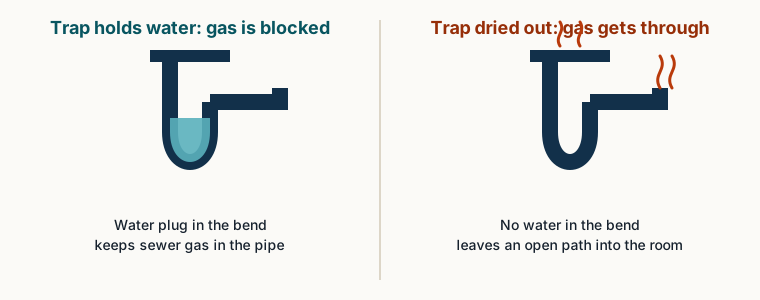
Sewer gas can enter through a dry drain trap, a failed seal or a damaged vent. There's no water on the floor, but the smell keeps coming back, often strongest near one drain.
Quick checks you can do
- Run water in rarely used drains, especially basement floor drains and utility sinks, for a minute or two to refill the trap.
- Note whether the smell is strongest at one drain, along one wall or through the whole room.
- Think back: did it start after heavy rain, a slow drain or a recent cleanup?
- Check for damp spots on the floor, walls or stored boxes near the smell.
If the smell is strongest at a floor drain and refilling the trap doesn't help, or you find any wet spots, call. A sewage smell together with dampness points to contamination rather than a dry trap.
Where odor hides
Odor lodges in places you can't easily see or reach:
- Carpet padding and the underside of carpet
- The bottom of drywall and the insulation behind it
- Wood framing, sill plates and subfloor edges
- Cracks and pores in concrete
- Drain traps, floor-drain bodies and standpipes
- Stored boxes, upholstered furniture and fabric
Spraying a deodorizer before those materials are dealt with only covers the smell for a while.
How odor is typically removed
The order matters: source first, odor treatment second.
- Remove the source. Contaminated porous materials come out. See Category 3 cleanup for how those decisions are made.
- Clean and disinfect what stays. Concrete, framing and hard surfaces are treated.
- Dry the space. Damp materials keep odor alive. See drying and mold prevention.
- Treat the air and surfaces. Air scrubbing, ventilation and deodorizing products are options depending on the space.
When the smell keeps coming back
A returning odor after cleanup usually means one of two things. Moisture may still be in the structure, so drying wasn't complete. Or the plumbing itself is releasing sewer gas through a dry trap, a failed seal or a damaged vent.
A camera inspection can show whether the line is damaged, and drain cleaning can clear a partial blockage that keeps causing trouble. Problems that are purely about plumbing vents or fixture seals are general plumbing work. Where that falls outside our services, we'll tell you so rather than guess.
Odor and health
A persistent sewage smell is something to find and fix rather than get used to. Ventilate the space, find the source and don't assume it's harmless. If anyone has headaches, nausea or breathing trouble around the smell, leave the area and get fresh air, and if symptoms continue, contact a medical professional.
What not to rely on
- Air fresheners and candles, which mask smell without addressing the source
- Bleach poured into drains, which doesn't remove contaminated material and shouldn't be mixed with other cleaners
- Fans blowing across contaminated materials, which can spread contamination
For what to do right after a backup, see the first-hour guide.
Common questions
Is sewer gas dangerous?
Persistent sewer gas isn't something to ignore. Ventilate the space, find the source and get help if anyone feels unwell.
Will bleach get rid of the smell?
Not by itself. It doesn't remove contaminated material, and it shouldn't be mixed with ammonia or other cleaners.
Why does the smell get worse in summer?
Warmth and humidity make odors from damp, contaminated materials more noticeable, and they make it easier for mold to start. That's one reason drying matters.
The smell is only near one drain. What does that mean?
Often the trap has dried out. Run water for a minute or two. If the smell returns quickly or you see moisture nearby, it may be a bigger issue and worth a call.
Call about a sewage smell
Tell us where the smell is strongest, whether there was water on the floor and whether it started after rain or a backup.